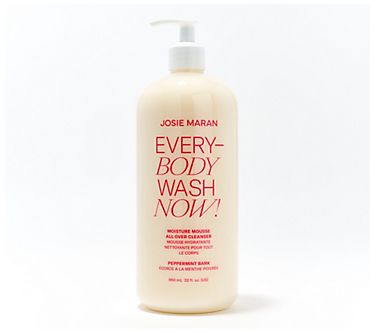

If you’ve been a Josie Maran fan on QVC, you may have noticed something missing — her face, her argan oil pitches, and those long segments she’d sometimes broadcast from a beach in St. Barts. After about 16 years on the network, she’s stepped away, and a lot of people want to know why.
The short answer is that she cited work and family obligations. But there’s a little more context worth understanding — especially if you care about what this means for her brand, or what it says about how beauty companies and TV shopping networks work together over time.
Let’s walk through what we actually know, what’s speculation, and what’s happening with her brand now.
Who Josie Maran Is and How QVC Fit Into Her Business
Josie Maran started out as a model and actress. She walked away from that career to build something she genuinely believed in — a clean beauty brand built around argan oil. That brand, Josie Maran Cosmetics, became one of the earliest names in clean beauty, long before that term became a crowded marketing buzzword.
QVC wasn’t just a sales channel for her — it was a core part of how her business operated for roughly 16 years. She was the face of her products on air, showing up personally to pitch and demonstrate rather than sending a representative. That made her relationship with QVC much more personal than a typical vendor deal.
She was so committed to being there that she actually bought a home in Pennsylvania, because QVC’s studio is about 10 minutes away and she was there constantly. That’s not the behavior of someone treating QVC as a side channel. It was built into her daily professional life.
During the pandemic, when QVC closed its studio, she adapted quickly — broadcasting shows remotely from her bed in St. Barts. That flexibility kept her on air even when the setup was anything but normal.
What Josie Maran Actually Said About Leaving
The most consistent explanation shared with fans is that she stepped away “due to work and family obligations.” That language showed up in content circulating on TikTok around the time of her final show, and it tracks with what QVC community forums and Reddit threads have reported.
She framed the departure as stepping away indefinitely — not as a permanent goodbye, but with no return date mentioned either. That leaves things open-ended, at least officially.
Some viewers found the timing a little puzzling. A few forum users pointed out that her children are older now, so “family obligations” felt like an unexpected reason to some fans who expected that phase of life to mean more freedom, not less. But that reaction is viewer speculation — she hasn’t publicly elaborated on the specifics, and it’s not fair to read too much into it.
There’s also been no formal joint statement from QVC and Josie Maran explaining the business side of things. What we have is the “work and family” explanation shared with fans, and community discussion filling in the gaps around that.
The Business Pressures Some Vendors Face on QVC
This is where the article gets a bit more nuanced — and where it’s important to be clear about what’s confirmed versus what’s context.
Some customers and people familiar with QVC vendor relationships have noted that the network tends to push brands toward larger, “supersize” product formats. These formats work well for QVC’s promotional style — they make a deal feel like strong value. But for a brand, producing oversized inventory can strain margins and complicate the overall product strategy.
Think of it like a wholesale club. Buying in bulk is great for the buyer’s perceived value, but it’s not always ideal for a brand that wants to sell smaller, premium products at healthier profit margins. If a retailer consistently wants the big bundle version of everything, and your brand strategy is moving in a different direction, that tension can become hard to ignore.
For a clean beauty brand like Josie Maran — which was in the middle of a full relaunch focused on sustainability and refined packaging — that kind of format pressure could create real friction. But this comes from Facebook group discussions among QVC customers, not from any official statement by Josie Maran or QVC. It’s worth including as context, not as a confirmed cause.
There’s also a broader picture worth mentioning: QVC itself has been managing significant internal changes. The network cut nearly 900 employees in a round of layoffs, which signals a company dealing with its own cost pressures. That doesn’t directly explain why Josie Maran left, but it does give a clearer sense of the environment she was operating in.
Her Brand Didn’t Go Anywhere — It Shifted Direction
This is probably the most important thing to clear up. Leaving QVC is not the same as shutting down the brand. Josie Maran Cosmetics is still very much active.
In 2024, she completed a full brand relaunch — new sustainable packaging, updated fragrances, and a fresh brand tagline: “Feel Good Naked.” A Forbes profile from early 2024 covered the relaunch in detail, showing a founder who was actively steering her brand forward, not stepping back from it.
She’s also been celebrating a one-year rebrand journey on social media, engaging directly with fans on TikTok and Instagram. That’s not what a brand in retreat looks like.
What’s really happening here is a channel shift, not a shutdown. QVC was one place to sell her products. It’s no longer that place — at least for now. Her products can still be found through other retailers and her own brand channels.
There’s actually a clear business logic to this kind of move. When a brand has been on QVC for 16 years, it’s already built strong awareness. At some point, a founder might reasonably ask whether the trade-offs — inventory demands, live appearance schedules, format pressures — are still worth it compared to selling directly to consumers or through retail partners who better match the brand’s current identity.
It’s a bit like a musician who built their audience through radio but eventually leans into streaming and direct fan engagement instead. The audience was already there. The channel just evolved.
The 2024 relaunch, with its focus on sustainability and clean ingredients, also seems to be targeting a younger, more digitally native consumer. That audience tends to shop online or at specialty beauty retailers — not necessarily through traditional TV shopping networks. Aligning your sales channels with your audience isn’t a retreat; it’s strategy.
For anyone interested in how founders navigate these kinds of decisions, Wise Business Guide covers brand strategy and business transitions in plain, practical terms.
What This Situation Tells Us About Beauty Brands and TV Shopping
Josie Maran’s departure from QVC is a useful case study in how long-term retail partnerships can run their course — even successful ones.
QVC helped her build real, sustained brand awareness over 16 years. That’s genuinely valuable. But the demands of live TV shopping — travel, appearances, format requirements, inventory commitments — are real costs. And as a brand matures and repositions, those costs can start to outweigh the benefits.
Add in the fact that QVC is navigating its own internal challenges, and it becomes even easier to see why a founder might decide this is a natural moment to step back and redirect energy elsewhere.
None of that makes this a dramatic falling out or a failure. It looks more like a business relationship that ran a long, productive course and then reached a natural transition point — for reasons that are probably both personal and professional, as most big decisions are.
The Bottom Line
Josie Maran stepped away from QVC citing work and family obligations, after about 16 years as one of the network’s most recognizable beauty vendors. She framed it as an indefinite departure, not a permanent one.
Beyond that stated reason, there’s community speculation about vendor pressures and format demands — but nothing confirmed by either party. What is confirmed is that her brand is still going, freshly relaunched, and she’s actively building it.
Whether she returns to QVC someday is an open question. But right now, it looks less like an ending and more like a founder choosing to spend her energy somewhere she has more control over how her brand shows up in the world.
You may also like: