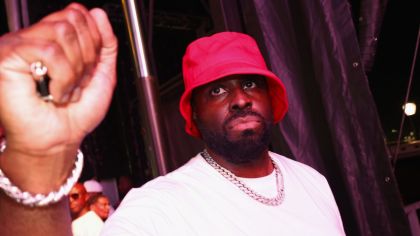

If you caught those headlines saying Funk Flex is leaving Hot 97, you’re not alone in being caught off guard. But the full story is a lot more layered than a simple goodbye — and most of what’s circulating online misses the point entirely.
Let’s break down what Flex actually announced, why Hot 97 made these changes, what happened with DJ Enuff, and what all of this tells us about how radio stations operate as a business right now.
He’s Not Leaving Hot 97 — But Something Did End
Here’s where the confusion started. Funk Flex posted that Labor Day would be his last show in the 7 PM slot on Hot 97. His exact words — “ALL THINGS COME TO AN END! END OF AN ERA THAT I ENJOYED VERY MUCH!” — hit hard. People read that and assumed he was walking out the door for good.
He wasn’t.
What actually happened is that Flex moved to a new time slot: 5 PM to 10 PM. He later went on air and made it clear he was not retiring from Hot 97. The 7 PM era ended. His time at the station did not.
Think of it like a TV anchor moving from a late-night show to the evening news. You wouldn’t say they left the network — they just changed shows. That’s essentially what happened here. A chapter closed, but the book is still open.
The problem was that his announcement was dramatic enough that it was easy to misread. And once social media ran with the “Flex is leaving” angle, the correction never quite caught up to the original headline.
Hot 97 Went Through a Real Restructure — Flex Was Just Part of It
This wasn’t just about one DJ changing time slots. Hot 97 went through a real shake-up around the same period, and Flex’s move was just one piece of a much bigger puzzle.
Here’s what changed all at once:
- Funk Flex moved from 7 PM to a 5–10 PM slot.
- Nessa shifted to a 1–5 PM slot.
- The morning show window was updated to 6–11 AM.
- DJ Enuff and DJ Camilo — both long-tenured veterans — were released from the station.
- Ebro in the Morning, which had run for over a decade, was canceled.
That’s not a coincidence. That’s a restructure.
Hot 97 is owned by MediaCo, and moves like this — reassigning some people, letting others go, reworking the schedule — are standard corporate behavior when a company decides to change direction. Some employees get new roles. Others get shown the door. The business keeps moving.
The fact that multiple changes happened at once actually helps explain why the Flex news felt so big. It wasn’t just him. The whole station was being rearranged, and his announcement happened to land in the middle of all that noise.
Where Funk Flex Fits in Hot 97’s Business Strategy Now
So why was Flex moved rather than let go, like Enuff and Camilo? That’s the question worth asking — and the answer says a lot about how radio stations think about talent.
The 5–10 PM window is considered drive-time radio. People are commuting home, running errands, winding down the day. More listeners tuning in means more eyeballs for advertisers, which means higher ad rates. It’s one of the most commercially valuable slots a station can offer.
Putting Flex there isn’t a demotion. It’s a signal that Hot 97 still sees him as a revenue driver. After more than 30 years at the station, he’s not just a DJ — he’s part of the brand itself. His bomb drops, his exclusives, his energy — that’s part of what makes Hot 97 sound like Hot 97.
When Ebro in the Morning ended, MediaCo reportedly leaned on Flex to cover mornings temporarily, which tells you something about how much trust the station places in him. Flex later clarified he only covered one day — not a permanent handoff — but the instinct to call on him first is telling.
Think of it like a star player being moved to a higher-impact position on the field. You don’t bench your most reliable performer. You put them where the game is being decided.
The DJ Enuff Situation — What We Know and What We Don’t
This part of the story got messy, and it’s worth being honest about what’s confirmed versus what’s still just speculation.
DJ Enuff was let go from Hot 97 after nearly 30 years at the station. That part is confirmed. It happened during the same period of restructuring that reshuffled the rest of the lineup.
What stirred the pot is that Enuff publicly said he believed Funk Flex may have played a role in his firing. He was clear, though, that he couldn’t prove it. He also mentioned that he and Flex hadn’t even spoken directly about the situation, which only made the speculation run wilder online.
Flex responded on air and denied any involvement. He pushed back firmly on the idea that he had “snaked” Enuff, and rejected the story that was circulating about him.
So where does that leave us? With a business-restructuring story that has a workplace-drama layer on top of it. Hot 97 made decisions at the corporate level. People lost jobs. Feelings got hurt. And because this is the world of personality-driven radio — where everyone has a microphone and an audience — those feelings went public fast.
It’s worth pointing out that this kind of thing happens in a lot of industries. When a company reorganizes, the people who are let go sometimes wonder who influenced the decision. Sometimes they’re right. Sometimes the answer is just that the budget changed. In this case, we genuinely don’t know — and neither does Enuff, by his own admission.
What we can say is that the Enuff situation highlights something real about how radio stations handle transitions. Long-tenured employees aren’t always protected by their history. Loyalty and tenure don’t always outweigh cost and strategy. That’s a hard business reality, and it played out very publicly here.
What This All Says About the Radio Business Right Now
Step back from the drama for a second, and there’s a bigger picture worth seeing.
Traditional radio is under real pressure. Streaming, podcasts, and social media have changed how people consume audio content. Stations like Hot 97 are competing not just with each other, but with Spotify playlists, Apple Music, and any number of independent creators posting content directly to their audiences.
In that environment, stations have to make calculated moves. They want their best-known personalities in the highest-value slots. They look for ways to streamline costs. And they’re more willing to part ways with long-term staff if the numbers don’t work out.
Understanding the business side of these decisions matters, especially if you follow the media or entertainment industry. If you’re looking to make sense of how companies navigate this kind of change, resources like Wise Business Guide can offer useful context on how organizations handle restructuring, talent strategy, and brand decisions.
The Funk Flex situation at Hot 97 is a good case study in how a legacy institution manages change while trying to protect its core identity. Flex is the brand. So they kept him — and moved him somewhere that helps the business most.
The Bottom Line
Funk Flex did not leave Hot 97. His 7 PM show ended, and he moved to a new 5–10 PM slot. He confirmed on air that he wasn’t retiring from the station.
What did happen is that Hot 97 went through a genuine restructure — schedule changes, veteran DJs being released, and a major morning show coming to an end. Flex was part of that transition, just not in the way most headlines suggested.
The DJ Enuff piece of the story is real, and the feelings involved are real. But what we actually know is limited: Enuff was let go, he suspects Flex may have been involved, and Flex denies it. That’s where the confirmed facts stop.
For now, Funk Flex is still at Hot 97, still on the air, and still very much part of the station’s plan. The era of the 7 PM slot is over. Everything else is still very much in motion.
You may also like: