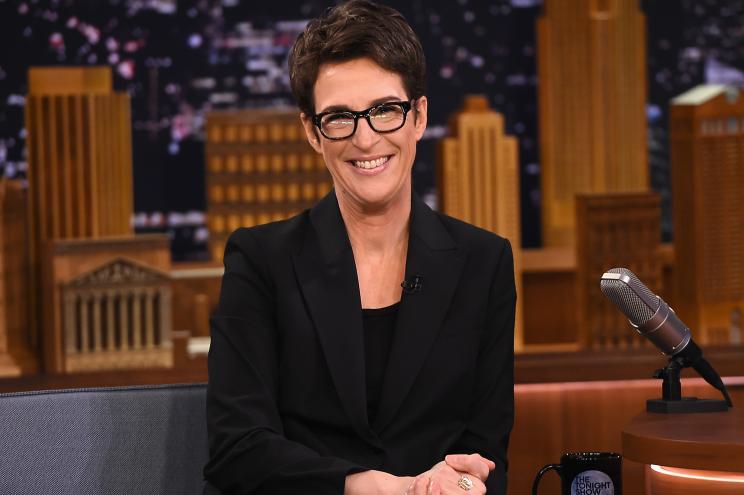

If you’ve seen headlines saying Rachel Maddow is leaving MSNBC and thought, “Wait, is she really gone?”—you’re not alone. The headlines made it sound bigger than it actually is. The short answer? She hasn’t left. But her role has changed in a pretty significant way, and there’s a real business story behind it.
This article breaks down exactly what happened—why she scaled back, what she’s doing now, who took over her primetime slot, and what it all means for MSNBC as a media business.
She Didn’t Leave — Her Role Just Changed
Let’s clear this up right away. Rachel Maddow did not leave MSNBC. She moved from hosting five nights a week to hosting one night a week—Mondays at 9 p.m. ET. That’s a big shift, but it’s not a goodbye.
She still holds an anchor role at the network and continues to show up for major breaking news and special coverage. In fact, Maddow herself has been pretty direct about this. She’s told interviewers she has no plans to leave, saying they’d have to drag her out. That doesn’t sound like someone who’s walking away.
The “leaving” story mostly spread because Jen Psaki took over the 9 p.m. slot Tuesday through Friday. Casual viewers saw a new face in that time slot and assumed Maddow was gone. She’s not. A role change is very different from a contract ending.
Why She Stepped Back from a Nightly Show
Hosting a live cable news show five nights a week sounds glamorous. In reality, it’s a grind. We’re talking hours of daily research and prep, constant breaking news, no real mental off switch, and doing it all over again the next morning.
By most accounts, that pace wore Maddow down. She reportedly wanted more time for bigger, longer-form projects rather than chasing the daily news cycle. Before renegotiating her contract, she actually took a nine-week sabbatical—a sign that she was seriously thinking through what she wanted next.
Think of it like a trial lawyer stepping back from daily court appearances to focus on major, complex cases instead. Same skills, same expertise—just a different pace and a different kind of work. That’s essentially what Maddow did.
Sources point to the nightly workload as one of the main reasons she even considered leaving MSNBC entirely before eventually choosing to renegotiate and stay on different terms.
The Business Deal Behind Her New Arrangement
This is where the story gets interesting from a business angle. Maddow didn’t just quietly step back—she renegotiated a new long-term deal with NBCUniversal. According to Vanity Fair, the deal is reportedly worth around $30 million per year, though that figure hasn’t been officially confirmed, so take it as reported rather than locked in.
What makes the deal notable isn’t just the money. It’s the structure. Instead of being tied to a nightly cable slot, Maddow gets to spread her work across podcasts, documentaries, books, and film and TV projects. She even launched her own production company called Surprise Inside to develop all of that work.
For NBCUniversal, this is actually a smart move. Rather than paying a premium talent just to anchor one cable show, they’re getting her brand active across streaming, audio, and film. That’s a lot more valuable in today’s media landscape than one nightly broadcast.
The analogy that fits here is a CEO stepping back from day-to-day operations but staying on the board. Maddow is still influential and still generating content—just not in the daily execution seat anymore.
Who Took Over the 9 P.M. Slot and How It Happened
Jen Psaki—former White House press secretary under President Biden—now hosts The Briefing with Jen Psaki, which airs Tuesday through Friday at 9 p.m. ET. The show launched on May 6, and Maddow publicly welcomed her to the slot.
This wasn’t a forced exit or a quiet shove out the door. Maddow described it as handing off the slot while staying on for Mondays. It’s the kind of deliberate, planned handoff that companies do when they’re grooming a successor—not a sudden departure.
It’s also worth noting that Maddow temporarily returned to hosting five nights a week during Trump’s first 100 days back in office. Once that period wrapped up, she returned to the Monday-only format. That kind of flexibility tells you she’s still very much part of MSNBC’s plans—they’re just using her differently.
What MSNBC Gains and Loses from This Arrangement
From a business standpoint, this arrangement has real trade-offs for MSNBC, and it’s worth being honest about both sides.
What MSNBC Gains
Keeping Maddow in any capacity is a win. She was MSNBC’s top personality for years, with her show consistently ranking among the top cable news programs. Losing her entirely would have been a much bigger headline.
By keeping her on a weekly schedule and spreading her work across platforms, MSNBC gets to retain her credibility and brand value without paying for five nights of live production every week. They also get to develop Jen Psaki as a fresh primetime voice, which helps build depth in the lineup.
On the broader corporate side, NBCUniversal benefits from Maddow’s content appearing across more channels—streaming, podcasts, film—rather than just one cable slot. That’s a better return on a big contract in a world where cable audiences are shrinking.
What MSNBC Loses
There’s no sugarcoating this part. Maddow hosting one night a week is not the same as Maddow hosting five. Her loyal audience tuned in night after night because she was consistent and reliable. That daily habit is now broken for most of the week.
MSNBC is also going through a broader period of change. Reports from outlets like Politico describe the network facing a real reckoning—lineup shifts, corporate restructuring under Comcast, and the challenge of staying competitive as cable continues to lose viewers to streaming. Maddow’s reduced schedule is part of a larger picture, not an isolated event.
There have also been discussions online about staff changes connected to her scaled-back schedule, with some of her team reportedly affected by the network’s broader restructuring. Details remain limited, but it’s worth noting that her schedule change didn’t happen in a vacuum.
Understanding this kind of strategic shift—how media companies manage top talent, renegotiate contracts, and adapt to changing platforms—is exactly the type of business story covered at Wise Business Guide.
What This Tells Us About the Bigger Picture
Maddow’s situation is a good case study in how the media industry is evolving. The old model—one host, one show, five nights a week, loyal cable audience—isn’t the only model anymore. Companies like NBCUniversal are starting to think about their big names as multi-platform brands, not just TV slots.
Podcasts, documentaries, streaming specials—these are real revenue streams now, and a trusted name like Maddow travels well across all of them. Locking her into a nightly cable show would actually limit what she can produce.
For Maddow personally, this looks like a career evolution that was driven by both exhaustion and ambition. She wanted to do bigger, slower, more thoughtful work. The nightly grind wasn’t giving her that. Renegotiating her deal gave her the space to build something different.
So, Is She Really Done with MSNBC?
Not even close. Rachel Maddow is on MSNBC every Monday night. She shows up for big news moments and special coverage. She’s publicly said, more than once, that she isn’t going anywhere.
The “leaving MSNBC” headlines were driven by a real change—she does host far less than she used to—but they overstated what actually happened. She scaled back. She renegotiated. She launched a production company and started building out a portfolio of longer work. That’s a career pivot, not a farewell.
If you were worried you’d lost her entirely, you haven’t. She’s just moved to a different lane—and by the sound of it, she’s pretty happy there.
You may also like: